Humanoids 2026 · Full-day Workshop

Energy-Aware Robotics

Design, Control, and Co-Design for Humanoid, Legged and Wearable Systems.

7 December 2026Humanoids · Legged · Wearable · MobileFull-day workshopSanta Clara Convention Center

Objective & Scope

Beyond the lab, limited onboard energy constrains robots’ autonomy, payload, computation, and performance. Since energy use depends on interactions among mechatronics design, actuation, planning, and control, this workshop connects researchers in mechatronics, optimization, control, learning, and simulation. Its scope spans energy-efficient mechatronics design; energy-aware locomotion and manipulation; real-to-sim and sim-to-real methods for modeling and simulating system energy efficiency; and optimization and learning approaches to improve whole-system energy efficiency.

Topics of Interest

From components to whole-robot systems, the workshop brings together complementary research perspectives on energy-efficient robotics.

Energy-Efficient Mechatronic Design +
Lightweight, compliant, and bio-inspired robot design
High-efficiency actuators, transmissions, and variable-stiffness mechanisms
Energy storage, power management, regenerative systems, low-power sensing, and onboard hardware
Energy-Aware Planning & Control +
Optimal, predictive, and whole-body control for energy reduction
Energy-aware motion planning and trajectory optimization
Learning-based and human-in-the-loop control for efficient locomotion, manipulation, and navigation
Hardware–Control Co-Design +
Joint optimization of morphology, actuation, motion, and control
Data-driven approaches for efficiency-oriented co-design
Energy–performance trade-offs across components and systems
Simulation, Real-to-Sim & Sim-to-Real +
Energy consumption modeling and simulation
System identification and model calibration
Transfer of energy-efficient policies and controllers to physical robots
Evaluation, Applications & Open Challenges +
Metrics, benchmarks, and reproducible experiments
Humanoid, legged, wearable, rehabilitation, wheeled, and hybrid mobile robots
Robustness, energy–performance trade-offs, safety, reliability, lifecycle impact, and long-duration deployment

Call for Contributions

Researchers from academia and industry are invited to share novel methods, experimental studies, benchmarks, tools, and ongoing projects in energy-aware robotics. Students and early-career researchers are especially encouraged to participate.

Submission

Submit an abstract of up to two pages describing the work and its relevance to the workshop. Submissions will be reviewed by the organizers for quality and relevance.

  • Submission deadline: 20 November 2026 27 November 2026
  • Acceptance notifications: 25 November 2026 29 November 2026
Submit your contribution ↗

Presentation

Accepted contributions will be presented as interactive posters during both coffee breaks. Authors are encouraged to highlight experiments, demonstrations, and video material.

  • The strongest contributions receive 15-minute talks

Invited Speakers

Researchers across robotics, actuation, control, and learning.

Wesley Roozing
  • Assistant Professor, Robotics and Mechatronics, University of Twente

Talk title: Actuation is key: Compliance, co-design, quasi-direct drives, and control for safe, adaptable, high-performance mechatronic systems

Carlos Mastalli
  • Assistant Professor, Heriot-Watt University; Lab Director, Robot Motor Intelligence (RoMI) Lab
  • Amazon Scholar, Amazon IRG

Talk title: Can Control and Estimation Unlock Robot Co-Design? — Contact-Implicit Methods and Differentiable Optimisation

Jonathan Hurst
  • Professor & Co-Founder, Oregon State University Robotics Institute
  • Chief Technology Officer & Co-Founder, Agility Robotics

Talk title: TBD

Tommaso Lenzi
  • Associate Professor, Mechanical Engineering; Adjunct Associate Professor, Biomedical Engineering, University of Utah

Talk title: Underactuated Compliant Mechanisms to Improve Electrical Efficiency and Mechanical Power Output in the Knee and Ankle Joints: Lessons Learned from the Utah Bionic Leg

Shuangyu Xie
  • Postdoctoral Researcher, AUTOLab, UC Berkeley

Talk title: Energy-efficient Planning for Agricultural Robots

Awaiting confirmation
Invited speakers
To be confirmed

Talk title: TBD

Provisional Program

The full-day workshop runs from 08:30 to 17:30. Each invited talk includes a 20-minute presentation and 5 minutes of questions. Four 30-minute slots are reserved for selected open-call contributions. The timetable will be confirmed one month before the conference.

TimeSpeakerAffiliationTitle / Activity
08:30–08:45OrganizersIIT (IT)Workshop introduction
08:45–09:10Invited speaker 1TBDTitle to be provided
09:10–09:35Invited speaker 2TBDTitle to be provided
09:35–10:05Open-call contribution 1Selected submission30-minute presentation
10:05–10:35Coffee break and poster session
10:35–11:00Invited speaker 3TBDTitle to be provided
11:00–11:25Invited speaker 4TBDTitle to be provided
11:25–11:55Open-call contribution 2Selected submission30-minute presentation
11:55–12:15Poster session, demonstrations, and networking
12:15–13:15Lunch break
13:15–13:40Invited speaker 5TBDTitle to be provided
13:40–14:05Invited speaker 6TBDTitle to be provided
14:05–14:35Open-call contribution 3Selected submission30-minute presentation
14:35–15:00Invited speaker 7TBDTitle to be provided
15:00–15:25Invited speaker 8TBDTitle to be provided
15:25–15:55Open-call contribution 4Selected submission30-minute presentation
15:55–16:25Coffee break and poster session
16:25–16:45Poster session, demonstrations, and networking
16:45–17:30Organizers & invited speakers—Round table: open challenges and future directions

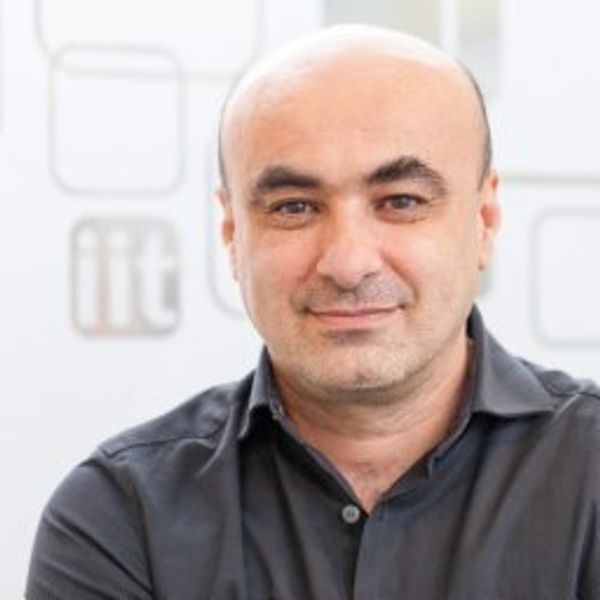
Organizers

Bringing together research leadership in humanoid robotics, mechanisms, and intelligent systems.